


Wound Care at Home: What Patients Need Beyond Dressing Changes
Wound care at home is rarely just about the wound itself. For many patients, healing is affected by chronic conditions, daily routines, mobility, nutrition, medication adherence, caregiver support, and whether changes are noticed early enough.
A dressing change may be part of the plan, but it is not the full picture. Patients with diabetes, vascular disease, limited mobility, heart disease, kidney disease, or other chronic conditions may face a slower or more complicated healing process. In the home setting, these risks become part of everyday care.
For patients across Miami-Dade and Monroe County, skilled home health support can help connect wound care instructions with the realities of daily life at home.
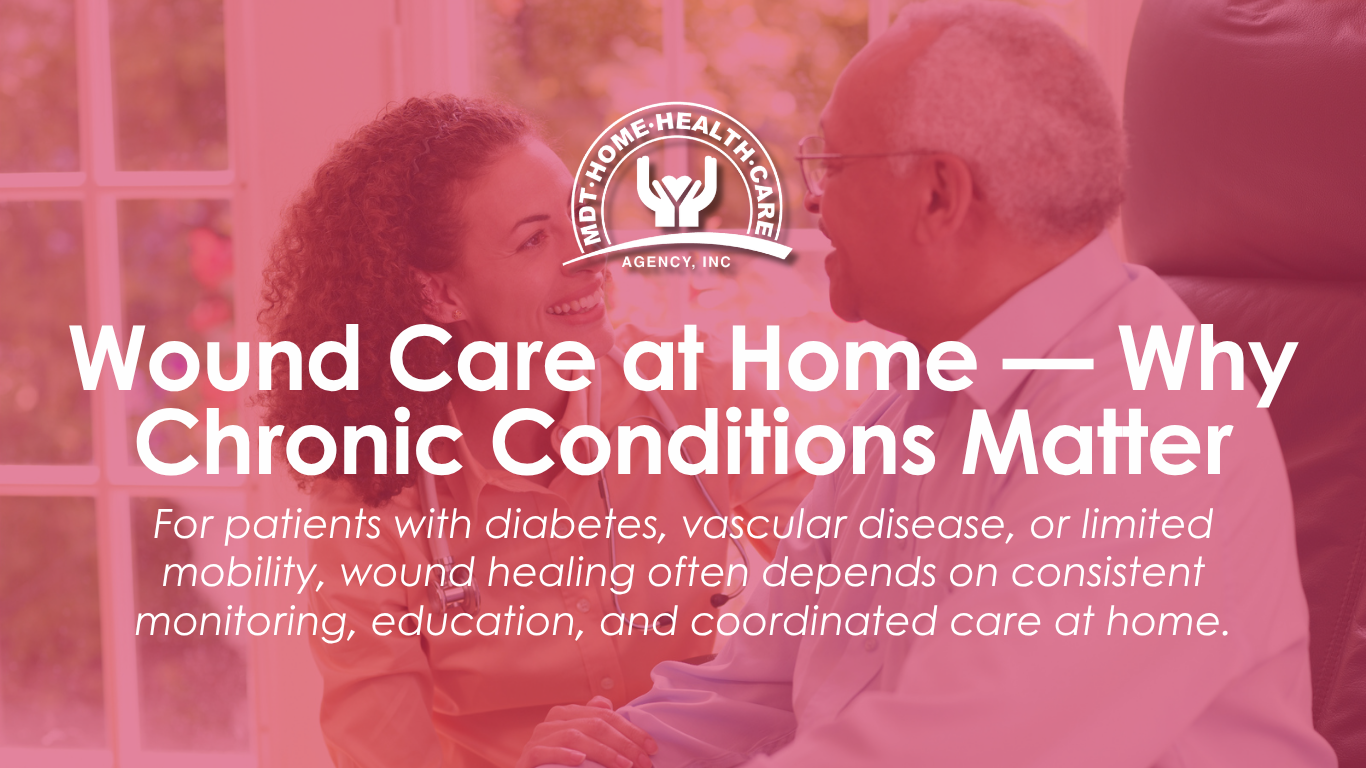
Why Wound Care at Home Requires Chronic Disease Support
Chronic disease can affect how the body responds to a wound. Circulation, blood sugar levels, nutrition, mobility, immune response, and overall health status can influence healing.
For example, diabetes can affect blood flow and nerve sensation, which may make wounds harder to notice and slower to heal. The CDC notes that diabetes-related nerve damage can increase the risk of foot ulcers and that daily monitoring helps patients catch problems early. For additional patient education, review these diabetes foot care resources from the CDC.
A patient with vascular disease may also have circulation issues that affect tissue repair. A patient with limited mobility may be at higher risk for pressure injuries. A patient who is weak after hospitalization may struggle to follow care instructions consistently without support.
These risks do not always appear as major changes at first. Sometimes the warning signs are subtle: increased drainage, a change in color, new odor, swelling, pain, redness, or a wound that is not progressing as expected.
For this reason, consistent monitoring becomes especially important when chronic conditions are involved.
What Can Go Wrong With Wound Care at Home
The home environment is where wound care becomes practical. Patients and caregivers must understand what to do, what to avoid, what to monitor, and when to report a concern.
Common challenges may include:
- Dressing instructions that are difficult for the patient or caregiver to follow
- Missed signs of infection or delayed healing
- Poor blood sugar control affecting wound progress
- Limited mobility increasing pressure injury risk
- Lack of understanding about pressure relief or repositioning
- Inconsistent nutrition or hydration
- Difficulty keeping follow-up appointments
- Caregiver uncertainty about what changes are urgent
- Confusion after hospitalization or surgery
These challenges do not usually happen because of a lack of effort. In many cases, patients and caregivers are trying to manage complex care with limited guidance between clinical visits.
The Role of Skilled Nursing in Wound Care at Home
Skilled nursing plays an important role in wound care at home. Nurses can assess the wound, monitor changes, reinforce physician orders, educate patients and caregivers, and communicate concerns to the appropriate providers.
In home health, the nurse can also observe the patient’s real environment. This includes how the patient moves, where they rest, whether supplies are available, whether the caregiver understands the plan, and whether home routines support or interfere with healing.
This perspective matters because wound care does not happen in isolation. It is connected to the patient’s broader health status and day-to-day support system.
How MDT Supports Wound Care at Home
At MDT Home Health Care Agency, our skilled nurses support wound care at home through structured assessment, education, monitoring, and care coordination.
In practice, this may include:
- Monitoring wound appearance, drainage, odor, pain, and surrounding skin changes
- Reinforcing wound care orders and dressing instructions
- Educating patients and caregivers on signs that should be reported
- Supporting pressure injury prevention through positioning and mobility awareness
- Identifying barriers such as limited supplies, caregiver uncertainty, or difficulty following instructions
- Communicating changes or concerns to the appropriate care team members
- Supporting chronic disease awareness when conditions may affect healing
- Coordinating with therapy or other disciplines when mobility, safety, or function affects wound risk
The goal is not only to complete a wound care task. The goal is to help the patient and caregiver understand how healing is supported at home.
Why Caregiver Education Is Essential
Many patients rely on family members or caregivers to help with daily routines. Even when caregivers are committed, they may not know what wound changes are expected, what signs are concerning, or how chronic conditions can affect healing.
Caregiver education may include guidance on:
- Keeping the wound area clean and protected according to the care plan
- Recognizing changes in drainage, odor, swelling, redness, or pain
- Understanding the importance of pressure relief and safe positioning
- Supporting medication and appointment adherence
- Encouraging nutrition and hydration when appropriate
- Knowing who to contact when something changes
- Avoiding delays when the wound is not improving
When caregivers understand their role, they can help reinforce the plan of care between skilled visits.
Chronic Disease Management and Wound Outcomes
Wound healing may be affected by conditions that require ongoing monitoring. Diabetes management, circulation concerns, medication routines, nutrition, infection risk, and mobility limitations can all influence outcomes.
This is why wound care-focused home health support often overlaps with chronic disease management. A nurse may be monitoring the wound, but also noticing changes in blood sugar patterns, swelling, medication adherence, patient weakness, or caregiver capacity.
These observations can help identify risks earlier and support better communication across the care team.
When to Refer for Wound Care at Home
A wound care-focused home health referral may be especially appropriate when:
- A patient has a wound requiring skilled assessment, monitoring, or dressing care
- The patient has diabetes, vascular disease, or another chronic condition affecting healing
- There are signs of delayed healing or a change in wound status
- The patient was recently discharged after hospitalization or surgery
- The patient has limited mobility or is at risk for pressure injuries
- A caregiver is unsure how to support wound care safely
- The patient has difficulty following instructions or attending follow-up visits
- There are concerns about infection, drainage, odor, redness, swelling, or pain
- The patient needs coordinated education and monitoring at home
These signs can help identify patients who may need structured support before complications worsen.
Supporting Safer Healing at Home
Wound care at home requires consistency, awareness, and communication. When chronic disease is part of the picture, skilled support becomes even more important.
With the right home health care plan, patients and caregivers can receive education, monitoring, and coordination in the environment where healing is taking place.
MDT Home Health Care Agency is Medicare-certified and Joint Commission accredited, serving Miami-Dade and Monroe County with 24-hour on-call clinical support.
To refer a patient who may benefit from skilled wound care support, chronic disease monitoring, and coordinated education at home, call 305-644-2100 or visit our MDT home health care resources.
To learn more about MDT’s home health care services in Miami-Dade and Monroe County, visit our website or contact our team.