Monitoring Beyond Discharge: Why Trends Matter More Than Snapshots
Readmission prevention doesn’t end at discharge. For high-risk patients — those managing chronic heart failure, COPD, diabetes, or recovering from surgery — the transition home is often when clinical oversight matters most. It’s also when the safety net thins out.
The hospital environment provides constant monitoring. Home does not. That gap is where preventable readmissions happen.
The Problem with Isolated Measurements
A single set of vitals, taken in isolation, rarely captures what’s actually happening. What matters is direction.
A patient whose weight increases 3 pounds over five days is telling a different story than one whose weight held steady. A gradual uptick in oxygen use, a wound that’s healing more slowly than expected, fatigue that wasn’t there last week — these are not dramatic findings. They don’t trigger alarms. They’re quiet signals that compound quietly until they’re no longer quiet.
By the time a patient or family member recognizes something is wrong, the window for early intervention has often already closed. That’s the gap structured monitoring is designed to close — not by waiting for a crisis, but by establishing what “baseline” looks like for each patient and tracking any movement away from it.
When reassessment happens consistently, and when escalation thresholds are defined before a patient ever shows a concerning sign, the clinical team has time to respond — not just react.
Continuity as a Clinical Tool
Home health monitoring, done well, doesn’t replace the original care plan. It reinforces it.
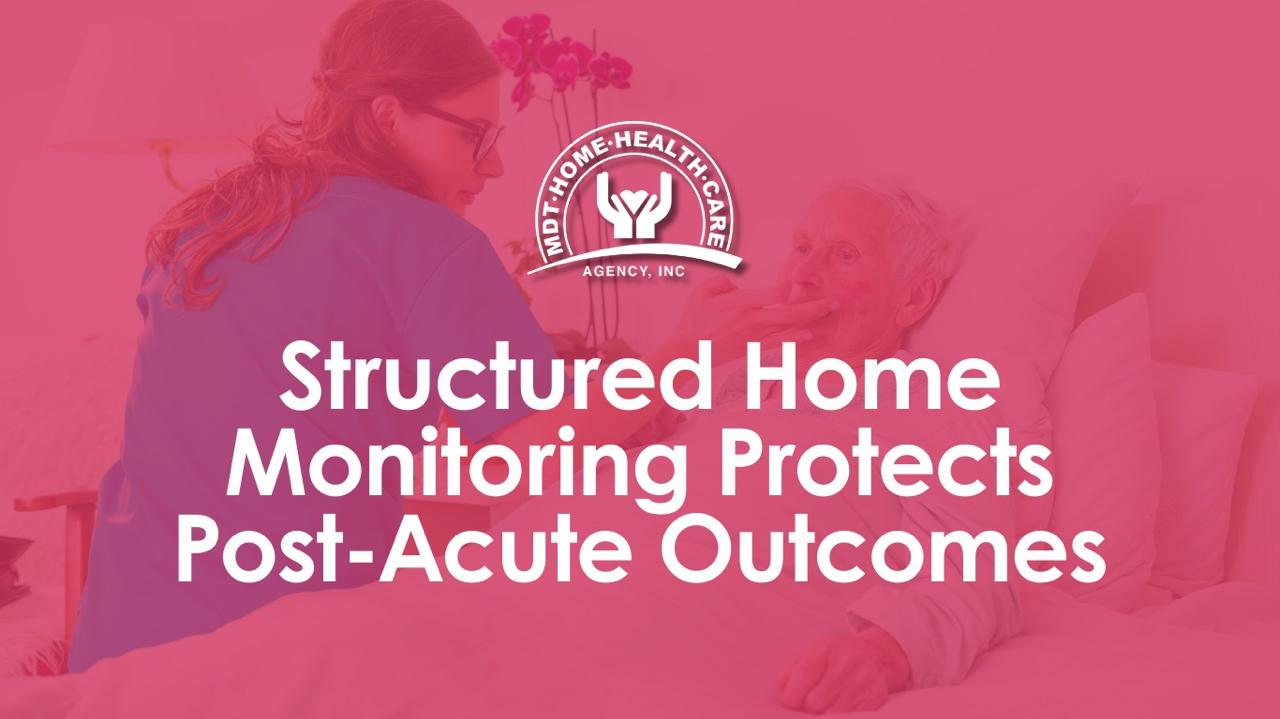
Medication adherence, symptom recognition, activity tolerance, wound progression — each of these is an opportunity to either confirm stability or identify a gap that needs attention before it becomes a hospitalization. Structured visits create a rhythm. That rhythm builds a picture. And that picture is what allows referring providers to make informed decisions between appointments, not just at them.
This kind of continuity also supports the referring team directly. When communication pathways are clearly defined — who flags a change, how quickly, and to whom — providers don’t have to chase information. It comes to them in a format they can act on.
The Role of Caregiver Education
Clinical visits alone are not enough. High-risk patients spend the vast majority of their time outside of scheduled assessments, and the people closest to them — family members, caregivers, spouses — are often the first to notice something has shifted.
When caregivers understand what to watch for and know exactly who to contact when something changes, the monitoring framework extends beyond clinical hours. That’s not a small detail. It’s frequently the difference between a call that prevents a hospitalization and an emergency room visit that didn’t need to happen.
What This Looks Like in Practice
At MDT Home Health Care Agency, monitoring protocols are built around three priorities: reassessment consistency, defined communication pathways, and direct coordination with referring teams. Protocols are tailored to each patient’s diagnosis and risk profile — because a post-surgical patient and a patient managing decompensated heart failure don’t share the same warning signs, and their monitoring shouldn’t look the same either.
The goal is to keep providers informed, keep patients stable, and keep unnecessary readmissions from becoming the default outcome for patients who could have been managed at home.
That work starts on day one — and it doesn’t stop until the patient no longer needs it.
.