

Main Line: 305-644-2100
Fax: 305-644-2910
Email: info@mdthomehealth.com

Family Caregiver Support Home Health


Family Caregiver Resources · Skilled Nursing · Miami-Dade & Monroe County

Family caregiver support home health starts the moment a patient comes home —when family becomes the care team, without ever being asked if they were ready for the job.

MDT Home Health Care  ·  Miami-Dade & Monroe County  ·  July 2026
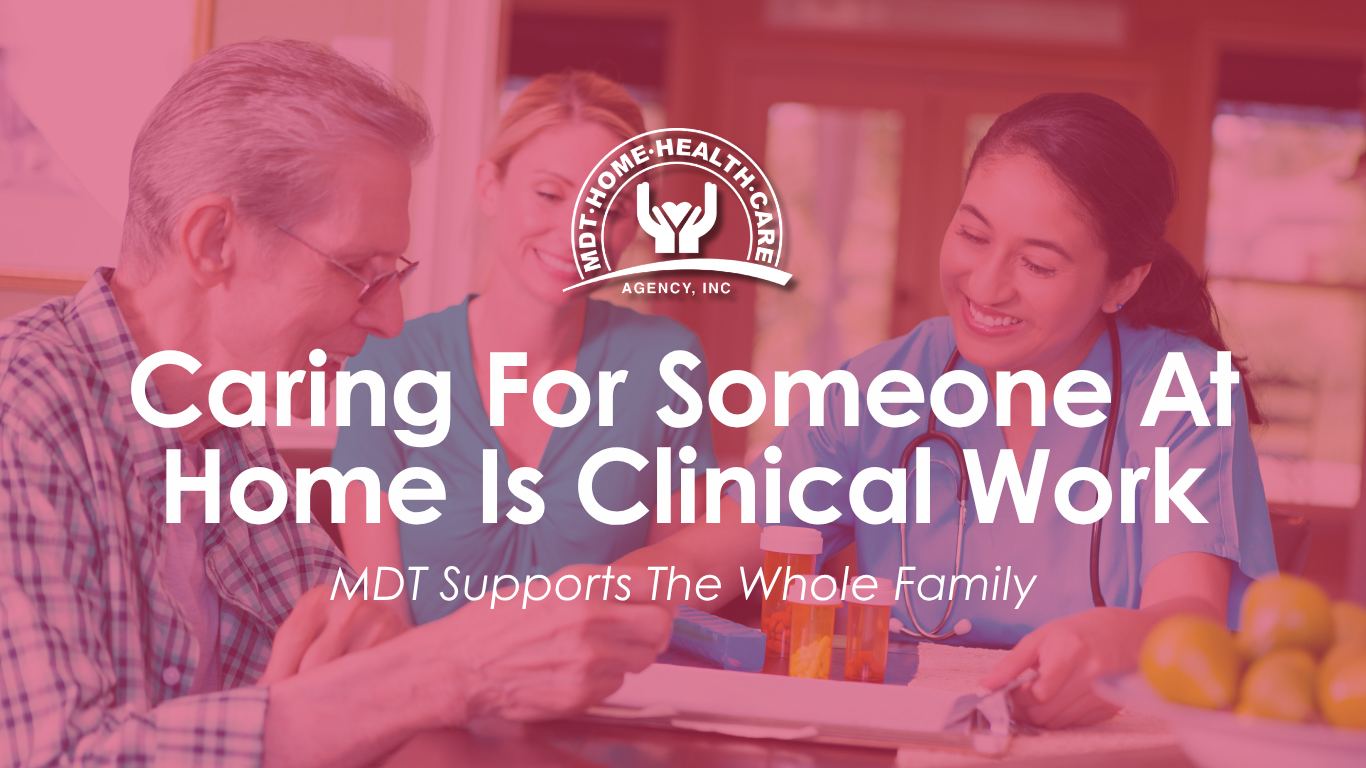

Family caregiver support home health — nurse training caregiver at home


When a patient returns home from the hospital, family caregiver support home health services often make the difference between a safe recovery and a preventable readmission. Family members suddenly manage medications, wound care, and transfers they were never trained to handle.

Medication management. Wound care instructions. Safe patient transfers. Monitoring for warning signs that something has changed.

These responsibilities often require real clinical guidance. Family members taking them on are usually doing their best, often under significant emotional and physical strain, without anyone having sat down to teach them how.

“Caring for someone at home is clinical work, whether or not anyone has named it that way.”

What Family Caregivers Are Often Asked to Do

It’s worth naming, plainly, what a family caregiver’s role often includes after a loved one comes home.

Medication administration. Caregivers often follow a schedule that changed significantly during a hospital stay, sometimes involving multiple medications with different timing and storage requirements.

Wound care. Caregivers change dressings and monitor for signs of infection, often following instructions a nurse gave quickly and verbally in a hospital room.

Safe patient transfers. Caregivers help a loved one move from bed to chair, chair to standing, or in and out of a vehicle — often without training in body mechanics that protects both the patient and the caregiver.

Symptom monitoring. Caregivers must know which changes in condition to expect, which ones raise concern, and when to call the physician or go to the emergency room.

Emotional and physical labor. All of the above, on top of the ordinary demands of life, frequently without a break.

Why Family Caregiver Support Home Health Matters Clinically

It’s tempting to frame caregiver support as a “nice to have” — a softer, secondary concern next to the patient’s clinical needs. In practice, the two connect directly: a caregiver who doesn’t understand how to administer medication correctly, recognize early signs of wound infection, or know when a symptom warrants a call to the physician directly affects the patient’s clinical outcomes.

That is exactly why family caregiver support home health services exist at MDT: to close the gap between a patient’s clinical needs and a family’s readiness to meet them. Effective home health care supports not just the patient, but the family caregiver who carries the work of care between clinical visits.

What Family Caregiver Support Home Health Includes During a Skilled Nursing Visit

When a patient is referred to MDT, support for caregivers may include

→  Caregiver education on safe patient transfer, medication administration, wound care techniques, and symptom monitoring

→  Clear instruction on warning signs to watch for, and how to reach MDT’s 24-hour on-call clinical team

→  Ongoing communication with the caregiver throughout the episode of care, as part of the care team

→  Coordination with the ordering physician when caregiver-reported observations are clinically relevant

Recognizing When a Caregiver Needs More Support

Families don’t always recognize when they’ve taken on more than they can manage safely, often because no one has told them what “equipped” should look like. Signs that a caregiver may benefit from additional clinical education and support include:

·  Uncertainty about how or when to administer medications correctly

·  Difficulty performing wound care as instructed, or uncertainty about what a healing wound should look like

·  Physical strain or fear of injury when helping with transfers or mobility

·  Not knowing which symptoms warrant a call to the doctor versus a trip to the emergency room

·  Visible exhaustion, stress, or a sense of being overwhelmed by the responsibility

None of these signal failure. Instead, they signal that the caregiver needs the kind of structured, clinical instruction a skilled nursing visit provides.

Who Benefits From a Home Health Referral That Includes Caregiver Support

A home health referral that includes meaningful caregiver support may be appropriate when:

→  A family caregiver is managing care responsibilities they have not been clinically trained for and requires skilled nursing instruction

→  The patient is returning home after hospitalization to a primary caregiver who needs guidance on post-discharge care tasks and warning signs

→  The caregiver’s capacity to safely support the patient’s care at home may benefit from skilled nursing assessment and ongoing education

For patients in Miami-Dade and Monroe County, Medicare-covered home health requires a physician’s order and confirmation that the patient meets homebound status under current Medicare guidelines. Learn more about our home health services or visit our referral page for specific eligibility questions.

How MDT Delivers Family Caregiver Support Home Health Services

At MDT Home Health Care, caregiver education is not a brief mention at the end of a visit. Our skilled nursing and therapy team builds it into how they work with every family.

How MDT Supports Caregivers

Hands-on instruction

Nurses show caregivers — not just tell them — how to safely perform the tasks specific to their loved one’s condition and plan of care.

Direct access to clinical support

Our 24-hour on-call team means a caregiver is never facing a question alone at 2 a.m.

Ongoing communication

We check in with caregivers throughout the episode of care, because confidence and competence build over multiple encounters.

Physician coordination

When a caregiver raises a clinically relevant concern, we make sure it reaches the ordering physician.

MDT Home Health Care serves patients and their families across Miami-Dade and Monroe County, Florida. We are Medicare-certified and Joint Commission accredited, with 24-hour on-call clinical support.

For Families Currently Managing Care at Home

If you are caring for a loved one and feel uncertain about any part of their care — medications, wound care, transfers, or simply knowing what’s normal — that uncertainty is a reasonable response to being asked to do clinical work without clinical training. Skilled home health support exists, in part, to close exactly that gap. See our guide to discharge planning and home health coordination for more on preparing for the transition home.

Family caregiver support home health, every day.

Caring for someone at home is clinical work. Family caregivers deserve the same clarity, instruction, and support that any member of a care team would expect — because, functionally, that’s exactly what they are.

At MDT Home Health Care, that is what we are here for: supporting the whole family, not just the patient.

Contact MDT to Refer a Patient →

MDT Home Health Care  ·  Medicare Certified  ·  Joint Commission Accredited  ·  24-Hour On-Call  ·  Miami-Dade & Monroe County, Florida
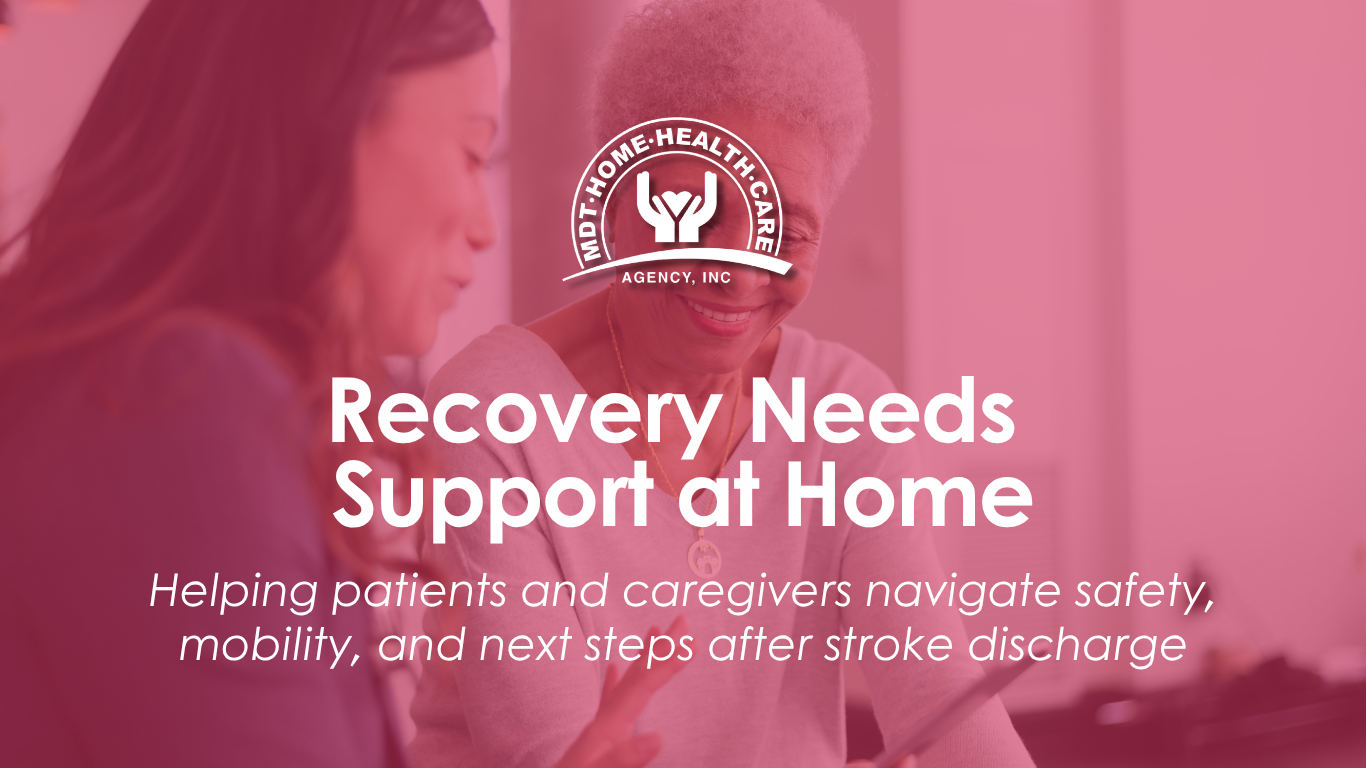
Stroke Recovery at Home | MDT Home Health

Stroke Recovery at Home: What Patients and Caregivers Need After Discharge

After a stroke, the transition home can be one of the most important phases of recovery. A patient may leave the hospital or rehabilitation facility medically stable. However, daily life at home may still involve changes in mobility, strength, speech, swallowing, memory, medication routines, and safety.

In home health care, this period matters because recovery does not happen only during a hospital stay. It continues in the patient’s real environment: the bedroom, bathroom, kitchen, hallway, and daily routines where risks and progress both become visible.

For patients across Miami-Dade and Monroe County, skilled home health support can help bridge the gap between discharge instructions and what actually happens at home.

Helping patients and caregivers navigate safety, mobility, and next steps after stroke discharge

Why Stroke Recovery Requires Support at Home

Stroke recovery often involves more than one clinical need. Some patients return home with weakness on one side of the body. Others may have difficulty walking safely, using the bathroom, preparing meals, remembering medications, or communicating clearly.

At the same time, families and caregivers may want to help but may not know what changes are expected, what warning signs require attention, or how to support recovery without increasing risk.

This is especially important when the home environment has stairs, narrow spaces, clutter, limited caregiver availability, or routines that were safe before the stroke but are no longer safe afterward.

For this reason, a successful transition home requires structure, education, monitoring, and coordination.

For additional patient and caregiver education, the American Stroke Association offers stroke recovery resources that explain how rehabilitation can support independence and daily function after a stroke.

What Can Get Missed After Discharge

After a stroke, small gaps in understanding or follow-through can affect recovery. These gaps do not usually happen because of a lack of effort. In many cases, patients and caregivers are managing new information during an already stressful time.

Common challenges may include:

  • The patient or caregiver does not fully understand medication changes
  • New weakness, fatigue, or balance issues
  • Increased risk of falls during transfers, bathing, or walking
  • Difficulty following therapy exercises correctly
  • Speech, swallowing, or cognitive changes that affect daily routines
  • Caregiver uncertainty about what is safe or unsafe
  • Missed warning signs of decline or complications
  • Confusion about follow-up appointments or care instructions

In the home setting, these issues may not be obvious right away. However, they often become visible during daily routines.

The Role of Skilled Home Health in Stroke Recovery

Skilled home health care brings support into the home, where recovery continues every day. Nurses and therapists can observe how the patient is functioning, identify barriers, reinforce education, and communicate concerns across the care team.

For stroke recovery, the care team may include skilled nurses, physical therapists, occupational therapists, speech therapists, medical social workers, or home health aides when appropriate.

Each discipline plays a different role. However, the goal is shared: helping the patient recover as safely and effectively as possible while supporting the caregiver and family.

As a result, home health support can help patients and caregivers move from discharge instructions to safer daily routines.

How MDT Supports Stroke Recovery at Home

At MDT Home Health Care Agency, our team supports stroke recovery by focusing on the patient’s clinical needs, home environment, and caregiver support system.

In practice, this may include:

  • Reinforcing discharge instructions and medication routines
  • Monitoring changes in condition, symptoms, and safety concerns
  • Supporting mobility, balance, transfers, and fall prevention
  • Helping patients regain confidence with daily activities
  • Identifying communication, cognitive, or swallowing concerns that may need follow-up
  • Educating caregivers on safe routines and warning signs
  • Coordinating concerns across nurses, therapists, families, and physicians
  • Encouraging continuity between the plan of care and what is happening at home

Stroke recovery is not only about completing exercises or attending appointments. It is also about helping the patient and caregiver understand how to manage care safely between visits.

Why Caregiver Education Matters

After a stroke, caregivers often become essential to the recovery process. They may assist with walking, bathing, meals, medications, transportation, appointments, and emotional support.

However, caregiving after a stroke can be overwhelming, especially when the caregiver has not been trained on what to expect.

Caregivers may need guidance on:

  • How to help with transfers without causing injury
  • What symptoms should be reported
  • How to support medication adherence
  • How to encourage safe movement
  • How to reduce fall risks at home
  • How to respond to changes in speech, mood, memory, or behavior
  • When to contact the care team

When caregivers are better supported, the patient’s recovery environment becomes safer and more consistent.

When to Refer: Patients Who May Benefit from Stroke Recovery-Focused Home Health Care

Clinicians may consider a stroke recovery-focused home health referral when:

  • A patient was recently discharged after a stroke or transient ischemic attack
  • New weakness, balance issues, or mobility limitations are present
  • There are concerns about falls, transfers, or unsafe movement at home
  • Discharge instructions are difficult for the patient or caregiver to follow
  • Medication regimens changed after hospitalization
  • Changes in speech, swallowing, memory, or cognition affect daily routines
  • The caregiver is unsure how to support recovery safely
  • The patient lives alone or has limited support between visits
  • The family needs education on warning signs and care expectations

These signs can help identify patients who need support before avoidable complications occur.

Supporting Recovery Beyond Discharge

Stroke recovery is a process. The home setting can support that process, but it can also create new risks if the patient and caregiver are not properly guided.

With the right clinical support, patients can receive education, monitoring, therapy, and coordination in the place where recovery continues every day.

MDT Home Health Care Agency is Medicare-certified and Joint Commission accredited, serving Miami-Dade and Monroe County with 24-hour on-call clinical support.

To refer a patient who may benefit from skilled home health support, therapy coordination, and stroke recovery education at home, call 305-644-2100 or visit our MDT home health care resources.

To learn more about MDT’s home health care services in Miami-Dade and Monroe County, visit our website or contact our team.