


Main Line: 305-644-2100
Fax: 305-644-2910
Email: info@mdthomehealth.com

Heart Failure Monitoring at Home Miami: What to Know


Heart Failure Monitoring at Home Miami · Chronic Condition Care · Miami-Dade & Monroe County

Heart failure monitoring at home Miami can catch a few pounds of weight gain before it becomes a hospital admission.

MDT Home Health Care  ·  Miami-Dade & Monroe County  ·  August 2026
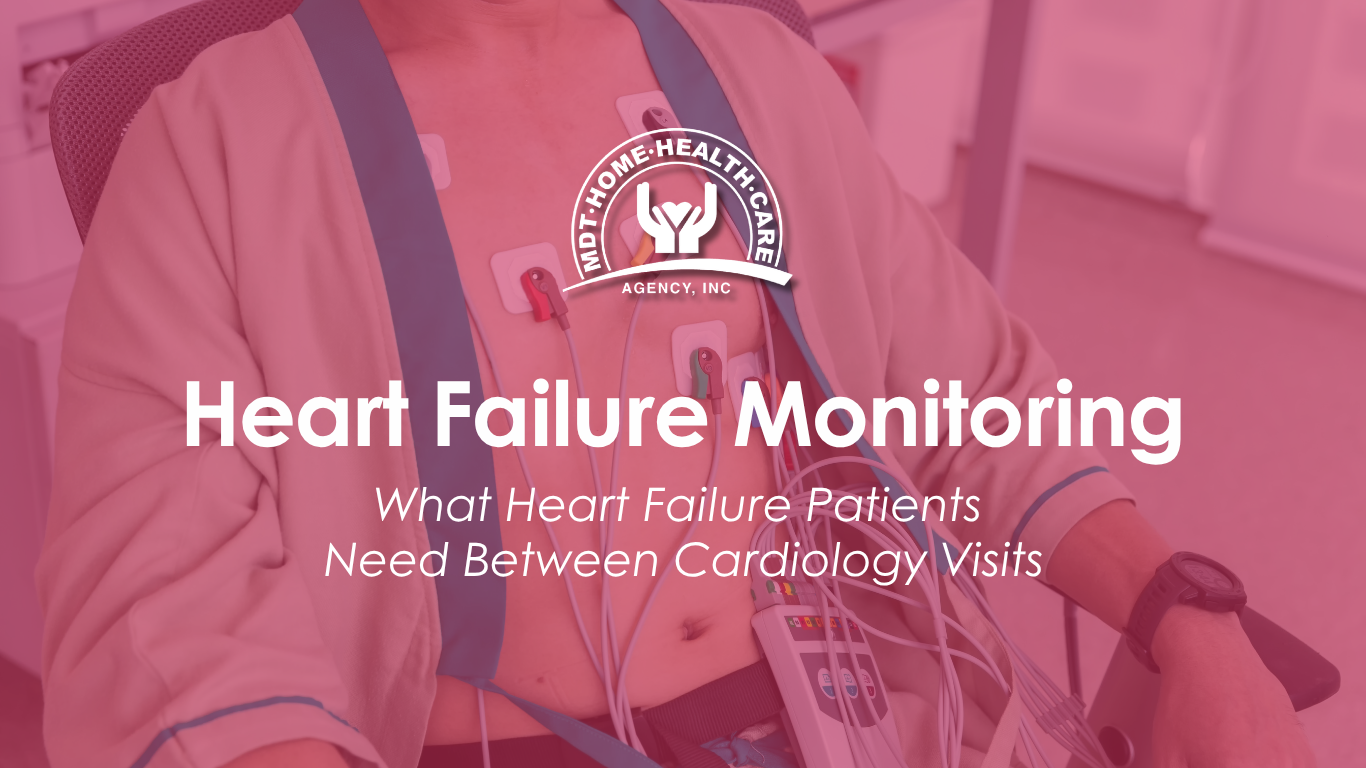

Heart failure monitoring at home Miami — nurse checking patient vitals at home


For patients living with heart failure, the difference between a stable week and a hospital admission can come down to a few pounds of weight gain or a little extra swelling in the ankles. Heart failure monitoring at home exists to catch those changes before they become a crisis.

Additionally, heart failure is a condition that requires ongoing vigilance, not just periodic check-ins with a cardiologist. The days and weeks between appointments are when most of the meaningful changes in a patient’s condition actually happen.

“A single weight reading tells you very little. A pattern of weight gain over several days tells a clinician a great deal.”

Why heart failure requires day-to-day attention

Specifically, heart failure means the heart isn’t pumping as efficiently as it should, which often leads to fluid retention. That fluid retention shows up gradually — as weight gain, swelling, or shortness of breath — well before it becomes severe enough for a patient to recognize something is seriously wrong.

For example, this is part of why heart failure management relies heavily on trend-watching rather than single data points. According to the American Heart Association, tracking daily weight is one of the simplest and most effective ways to catch fluid buildup early.

What heart failure monitoring at home Miami includes

Therefore, skilled nursing visits for heart failure patients are grounded in the physician’s plan of care.

Typically includes

→  Weight tracking against baseline and recent trend — one of the earliest signs of fluid retention

→  Edema assessment — checking for swelling and whether it’s improving, stable, or worsening

→  Vital sign monitoring — blood pressure, heart rate, and oxygen saturation against baseline

→  Medication review, dietary education, and physician communication on early warning signs

Who is appropriate for heart failure home health monitoring

A home health referral for heart failure monitoring may be appropriate when a patient:

·  Has a physician’s order for skilled nursing related to heart failure management, including patients recently discharged after an exacerbation

·  Has a history of fluctuating weight or fluid retention that requires close tracking

·  Is on a complex diuretic or cardiac medication regimen that requires monitoring

·  Has had difficulty following sodium or fluid restriction guidance

For patients in Miami-Dade and Monroe County, Medicare-covered home health requires a physician’s order and confirmation that the patient meets homebound status under current Medicare guidelines. Learn more about our home health services or visit our referral page for specific eligibility questions.

What heart failure monitoring at home Miami looks like at MDT

Ultimately, at MDT Home Health Care, skilled nursing support for heart failure is built around consistent, trend-based monitoring rather than one-time check-ins.

MDT Heart Failure Monitoring Process

Baseline assessment

During the initial visit, establishing the patient’s typical weight, vital signs, and functional status.

Regular monitoring visits

At the frequency ordered by the physician, with comparison against the established baseline.

Clear communication protocols

So weight or symptom changes are reported to the physician promptly, not just at the next visit.

Patient & caregiver education

On daily self-monitoring between visits and when a change warrants a call.

Furthermore, MDT Home Health Care serves patients across Miami-Dade and Monroe County, Florida. We are Medicare-certified and Joint Commission accredited, with 24-hour on-call clinical support.

A note for families

In short, if you’re caring for someone with heart failure and you’ve noticed their shoes fitting tighter, their breathing seeming more labored when they lie down, or unexplained weight gain over a few days — those are worth taking seriously and reporting, not waiting to mention at the next cardiology appointment. For more on managing chronic conditions at home, see our guide to chronic disease monitoring at home.

Heart failure management happens between cardiology visits.

Skilled, trend-based monitoring at home gives patients and families a much better chance of catching problems while they’re still small.

At MDT Home Health Care, that is what our skilled nursing team is here to provide.

Contact MDT to Refer a Patient →

MDT Home Health Care  ·  Medicare Certified  ·  Joint Commission Accredited  ·  24-Hour On-Call  ·  Miami-Dade & Monroe County, Florida

Heart Failure Monitoring at Home Miami | MDT


Heart Failure Monitoring at Home Miami · Chronic Condition Care · Miami-Dade & Monroe County

Heart failure monitoring at home Miami can catch a few pounds of weight gain before it becomes a hospital admission.

MDT Home Health Care  ·  Miami-Dade & Monroe County  ·  July 2026


Heart failure monitoring at home Miami — nurse checking patient vitals at home


For patients living with heart failure, the difference between a stable week and a hospital admission can come down to a few pounds of weight gain or a little extra swelling in the ankles. Heart failure monitoring at home exists to catch those changes before they become a crisis.

Additionally, heart failure is a condition that requires ongoing vigilance, not just periodic check-ins with a cardiologist. The days and weeks between appointments are when most of the meaningful changes in a patient’s condition actually happen.

“A single weight reading tells you very little. A pattern of weight gain over several days tells a clinician a great deal.”

Why heart failure requires day-to-day attention

Specifically, heart failure means the heart isn’t pumping as efficiently as it should, which often leads to fluid retention. That fluid retention shows up gradually — as weight gain, swelling, or shortness of breath — well before it becomes severe enough for a patient to recognize something is seriously wrong.

For example, this is part of why heart failure management relies heavily on trend-watching rather than single data points. According to the American Heart Association, tracking daily weight is one of the simplest and most effective ways to catch fluid buildup early.

What heart failure monitoring at home Miami includes

Therefore, skilled nursing visits for heart failure patients are grounded in the physician’s plan of care.

Typically includes

→  Weight tracking against baseline and recent trend — one of the earliest signs of fluid retention

→  Edema assessment — checking for swelling and whether it’s improving, stable, or worsening

→  Vital sign monitoring — blood pressure, heart rate, and oxygen saturation against baseline

→  Medication review, dietary education, and physician communication on early warning signs

Who is appropriate for heart failure home health monitoring

A home health referral for heart failure monitoring may be appropriate when a patient:

·  Has a physician’s order for skilled nursing related to heart failure management, including patients recently discharged after an exacerbation

·  Has a history of fluctuating weight or fluid retention that requires close tracking

·  Is on a complex diuretic or cardiac medication regimen that requires monitoring

·  Has had difficulty following sodium or fluid restriction guidance

For patients in Miami-Dade and Monroe County, Medicare-covered home health requires a physician’s order and confirmation that the patient meets homebound status under current Medicare guidelines. Learn more about our home health services or visit our referral page for specific eligibility questions.

What heart failure monitoring at home Miami looks like at MDT

Ultimately, at MDT Home Health Care, skilled nursing support for heart failure is built around consistent, trend-based monitoring rather than one-time check-ins.

MDT Heart Failure Monitoring Process

Baseline assessment

During the initial visit, establishing the patient’s typical weight, vital signs, and functional status.

Regular monitoring visits

At the frequency ordered by the physician, with comparison against the established baseline.

Clear communication protocols

So weight or symptom changes are reported to the physician promptly, not just at the next visit.

Patient & caregiver education

On daily self-monitoring between visits and when a change warrants a call.

Furthermore, MDT Home Health Care serves patients across Miami-Dade and Monroe County, Florida. We are Medicare-certified and Joint Commission accredited, with 24-hour on-call clinical support.

A note for families

In short, if you’re caring for someone with heart failure and you’ve noticed their shoes fitting tighter, their breathing seeming more labored when they lie down, or unexplained weight gain over a few days — those are worth taking seriously and reporting, not waiting to mention at the next cardiology appointment. For more on managing chronic conditions at home, see our guide to chronic disease monitoring at home.

Heart failure management happens between cardiology visits.

Skilled, trend-based monitoring at home gives patients and families a much better chance of catching problems while they’re still small.

At MDT Home Health Care, that is what our skilled nursing team is here to provide.

Contact MDT to Refer a Patient →

MDT Home Health Care  ·  Medicare Certified  ·  Joint Commission Accredited  ·  24-Hour On-Call  ·  Miami-Dade & Monroe County, Florida